.png)
Artificial Intelligence is accelerating digital transformation across industries, enabling smarter decisions, operational efficiency, and entirely new business models. From predictive analytics to autonomous systems, AI is reshaping how organisations compete, innovate, and deliver value.Yet, as AI capabilities expand, so do the risks and responsibilities that accompany them.
Concerns around bias, data privacy, explainability, regulatory compliance, and unintended societal impact are no longer peripheral issues they are board-level priorities. Stakeholders, regulators, and customers increasingly expect organisations to demonstrate not only technical capability but also ethical integrity in how AI systems are designed and deployed.Ethical AI is therefore no longer a theoretical principle it is a strategic imperative.
Organisations that fail to embed governance and accountability into their AI initiatives risk reputational damage, operational disruption, and regulatory exposure. Conversely, those that proactively build responsible AI frameworks create durable trust, competitive differentiation, and sustainable long-term growth.
The VE3 Ethical AI Maturity Framework provides a structured, practical roadmap to help organisations move beyond experimentation toward enterprise-scale, responsible AI adoption. It integrates governance, risk management, compliance, and ethical oversight directly into the AI lifecycle from strategy and data foundations to model deployment and continuous monitoring.
Together, these dimensions provide a comprehensive foundation for responsible and scalable AI adoption.
Establishing a clear strategic direction for AI that aligns with business objectives and ethical principles. This includes defining long-term AI goals, aligning AI initiatives with enterprise strategy, and ensuring continuous business alignment.
Ensuring AI practices are ethical, transparent, and aligned with societal values. This involves defining ethical guidelines, establishing governance structures, and continuously monitoring ethical compliance across AI systems.
Building and maintaining the tools, platforms, and infrastructure required for AI development and deployment. This includes evaluating existing systems, standardizing AI development practices, and optimizing infrastructure for scalability and performance.
Handling data responsibly, with a strong focus on data quality, privacy, security, and bias mitigation. This includes implementing robust data governance, privacy safeguards, and bias detection mechanisms.
Developing the skills, capabilities, and organizational culture required to support AI initiatives. This includes upskilling teams, fostering AI literacy, and creating centres of excellence to drive adoption.
Complementing the maturity stages are five dimensions that ensure holistic AI adoption

Long-term AI strategy, enterprise alignment, and continuous strategic evaluation.

Ethical governance, oversight mechanisms, transparency, and accountability across AI systems.

Data quality management, privacy protection, bias mitigation, and continuous data governance improvement.

Standardized AI tools, optimized infrastructure, scalable platforms, and performance monitoring.

Skills assessment, training programs, AI-ready culture, and the establishment of centres of excellence.
The VE3 Ethical AI Maturity Framework provides a structured and comprehensive approach for organizations to adopt and scale AI technologies responsibly. This implementation roadmap outlines the key steps and milestones for organizations to follow, ensuring a systematic progression through the five stages of AI maturity.
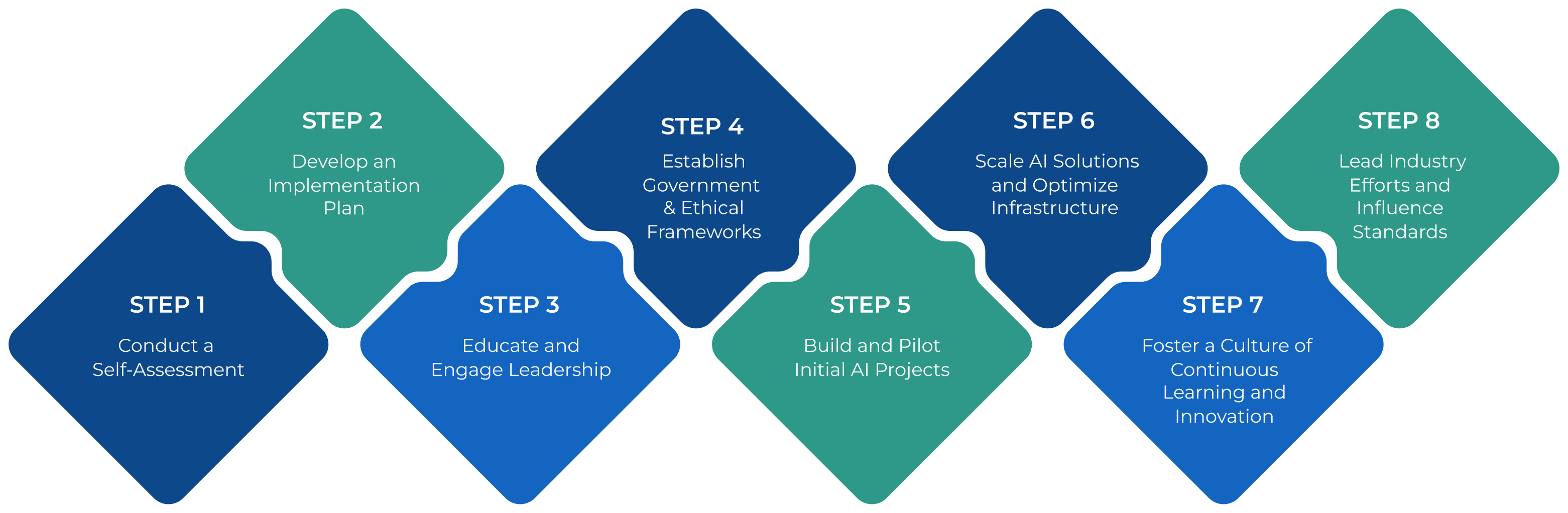
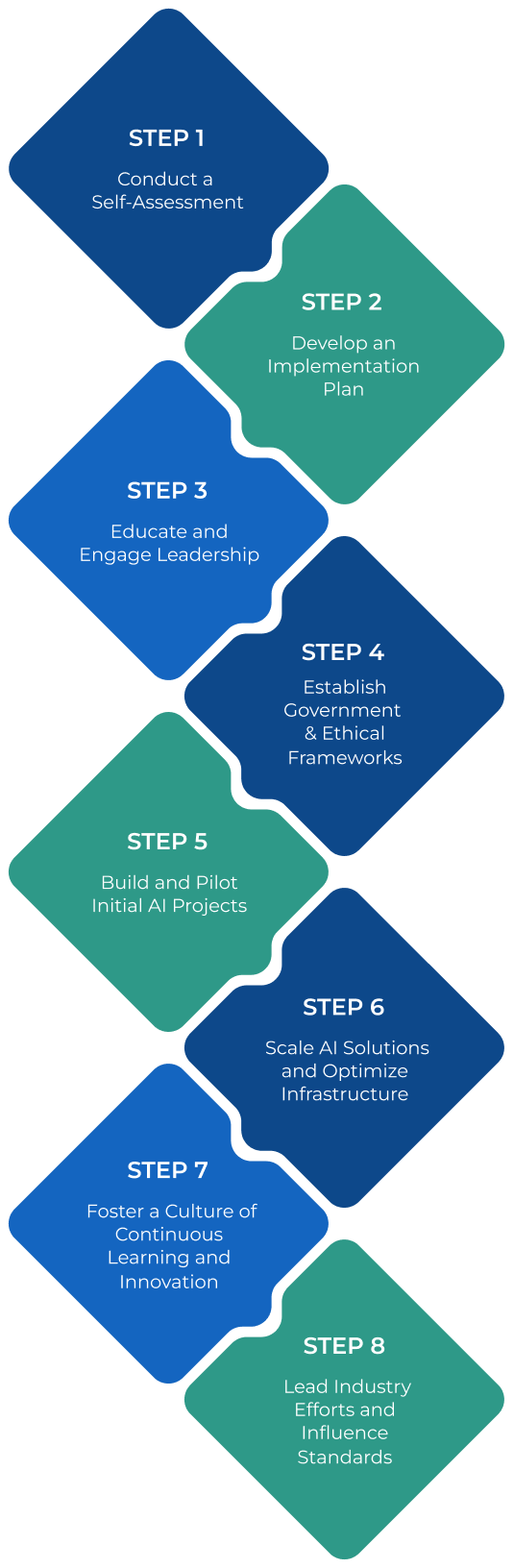
The framework defines five progressive stages of AI maturity, representing a structured journey from initial awareness to industry leadership.

Organizations recognize AI’s potential and focus on building foundational understanding. Key activities include educating stakeholders on AI capabilities, risks, and ethical considerations.

Organizations move from understanding to action by launching early AI initiatives. This stage focuses on project definition, data readiness, and initial resource allocation.

As experience grows, organizations build more advanced AI models, formalize ethical frameworks, and establish data governance practices.

AI capabilities are scaled across the enterprise. Governance, compliance, skills development, and infrastructure optimization become critical priorities.

Organizations reach advanced AI maturity, demonstrating leadership in AI innovation, governance, and ethical standards, while influencing industry best practices.
The implementation roadmap provides a structured approach for adopting and scaling AI responsibly. It ensures organizations progress methodically through each maturity stage while continuously improving governance and performance.

.png)







VE3 combines deep AI expertise with a strong focus on governance, ethics, and real-world impact. Organizations partner with VE3 to navigate complex AI challenges, implement responsible AI frameworks, and achieve sustainable, scalable outcomes.

Engage stakeholders at all levels to ensure alignment, transparency, and organizational support.

Continuously monitor, assess, and refine AI practices based on outcomes and feedback.

Maintain visibility into AI decision-making, development processes, and governance structures.

Embed ethical considerations into every phase of AI development and deployment.
.png)


