We are a leading AI solutions company. VE3 goes beyond crafting custom AI solutions, we engineer them responsibly.
Discover our commitment to shaping the future of AI with integrity, trust, and responsibility!
.png)
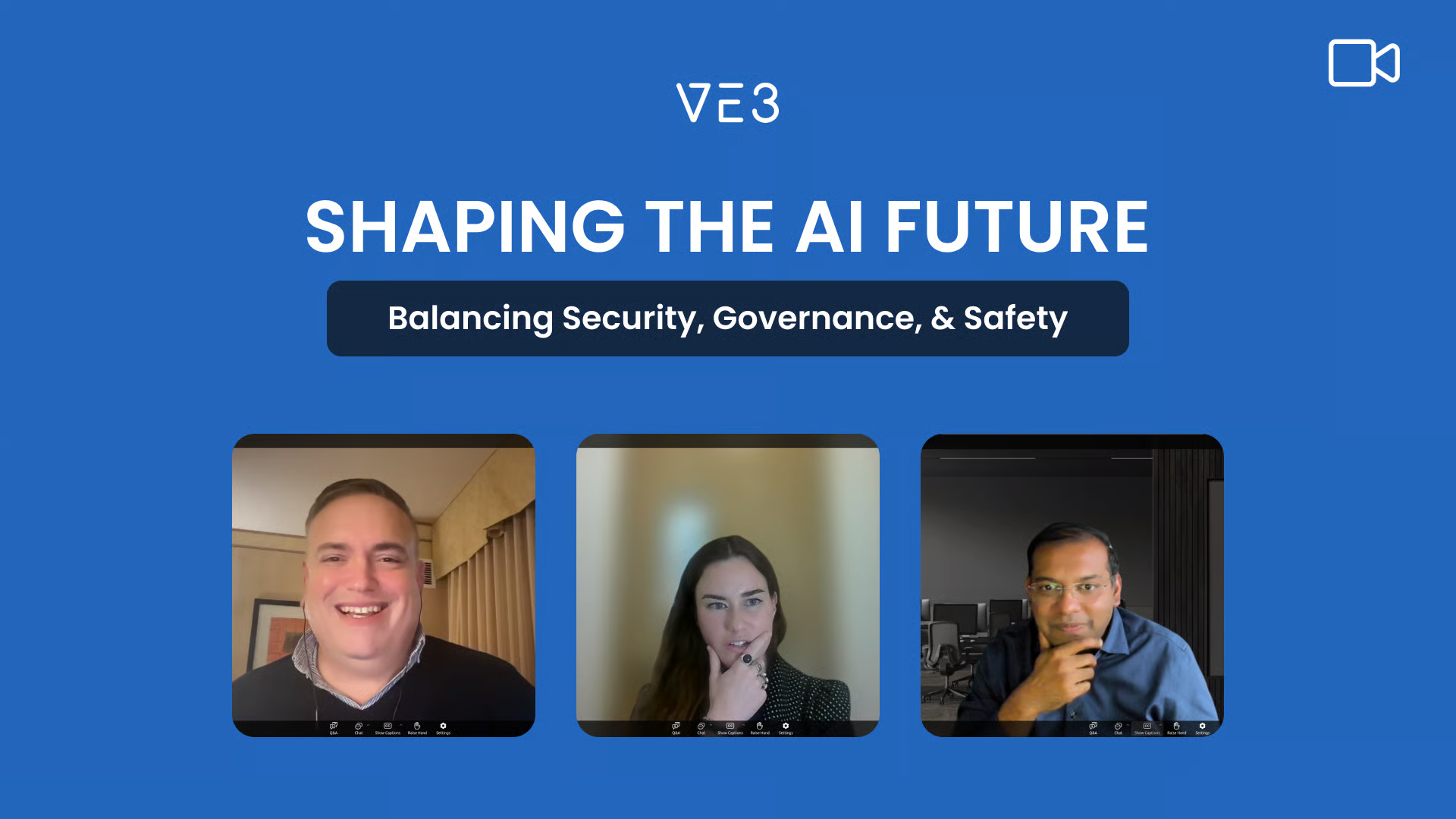
VE3 had a successful & highly engaging webinar focused on “Shaping the AI Future: AI Governance, Safety & Security.” The event brought together industry experts to explore the critical issues surrounding the secure, ethical, and responsible deployment of Artificial Intelligence technology. During the webinar, several key topics were discussed, addressing the current and emerging challenges organizations face in securing AI systems.
Advancing AI with Trust, Security, and Responsibility
VE3 had a successful & highly engaging webinar focused on “Shaping the AI Future: AI Governance, Safety & Security.” The event brought together industry experts to explore the critical issues surrounding the secure, ethical, and responsible deployment of Artificial Intelligence technology. During the webinar, several key topics were discussed, addressing the current and emerging challenges organizations face in securing AI systems.
AI introduces unique vulnerabilities such as model manipulation, data poisoning, and model inversion, alongside traditional cybersecurity issues like access control. Many organizations struggle with limited visibility into their AI models and data, increasing the risk of security breaches. To combat this, a proactive approach integrating risk-based frameworks, explainability tools, and advanced technologies is essential to mitigate threats.
Regulatory frameworks such as NIST, ISO 42001, and the EU AI Act are pivotal for managing security and compliance in AI. Oversight of AI data usage, ethical development principles, and rigorous risk assessments ensure AI systems operate safely, fairly, and responsibly. Governance tools like watermarking and cryptographic hashing help safeguard systems against misuse and maintain data integrity.
Interpretable AI models foster user trust while promoting safe interactions with technology. Ensuring the integrity of input data and the reliability of AI models is vital to preventing manipulation and unintended harm. Testing AI systems against established risk frameworks and integrating ethical principles throughout the lifecycle further ensures their safe and responsible operation.
Regulations guide innovation by enforcing ethical and transparent practices, especially in sensitive sectors like healthcare and finance. These sectors benefit from existing frameworks and ethical training, ensuring AI applications are aligned with safety standards while fostering growth.
Global cooperation is key to addressing the evolving landscape of AI risks. Initiatives such as CoSAI and open-source AI models provide platforms for sharing challenges and solutions. Collaboration between technical and non-technical teams ensures a holistic approach to AI governance and security.
In sectors like healthcare, the sensitive nature of data calls for clear frameworks to determine how AI systems use data. Organizations like the Coalition for Health AI play a critical role in promoting ethical and transparent practices. Regulation is not seen as a barrier but as a necessary “nudge” that ensures innovation remains aligned with ethical and societal needs, particularly for systems handling private and critical information.
This webinar emphasized on the critical need to harmonize governance, ethics, collaboration, and innovation to develop responsible AI systems. Striking the right balance between fundamental principles—Governance, Safety, and Security—is essential to ensure AI advancements align with ethical and societal expectations while fostering innovation.
Let's discuss how our data analytics expertise can drive growth and innovation for your business.
Let's Connect →.png)


